
Sabr is more than simply waiting
Patience can include remaining steady when something is difficult, resisting an impulsive response and continuing to do what is right even when progress feels slow. The Quran repeatedly connects patience with seeking Allah's help and remaining steadfast.
Shukr begins with noticing
Gratitude becomes easier when we deliberately notice what usually passes without attention: time with family, health, a meal, useful work, a kind word or an opportunity to begin again.
Difficulty and blessing can exist in the same day
Life rarely fits into a simple category of either good or bad. A person may be carrying a real difficulty while also receiving many blessings. Sabr does not require pretending hardship is easy, and shukr does not require ignoring pain.
Pause before reacting
One practical way to bring these values into daily life is to create a small pause before responding to frustration. That pause can give us space to choose a more patient word, remember a blessing or avoid making a difficult moment worse.
Return to Allah in both states
Patience in difficulty and gratitude in ease both redirect attention toward Allah. That makes them more than positive thinking; they are part of a believer's relationship with the Creator.
Small reminders can support reflection
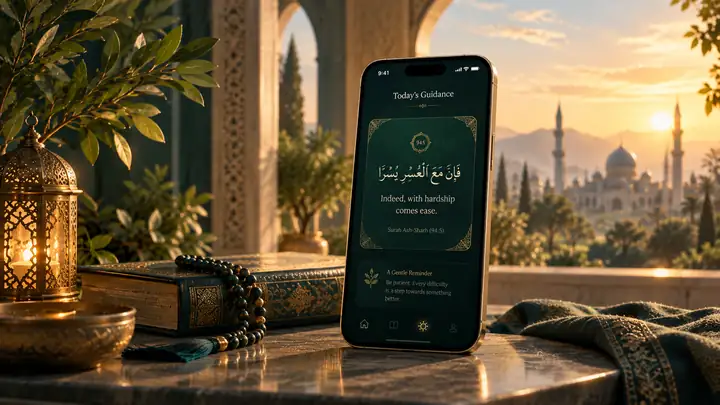
A verse, a prayer time or a quiet moment can become a cue to pause and reflect on how we are responding to the day.
Daily Guidance, without unnecessary noise
IHSAYA is designed to bring Quran and prayer back into ordinary moments of the day.
Explore Daily Guidance